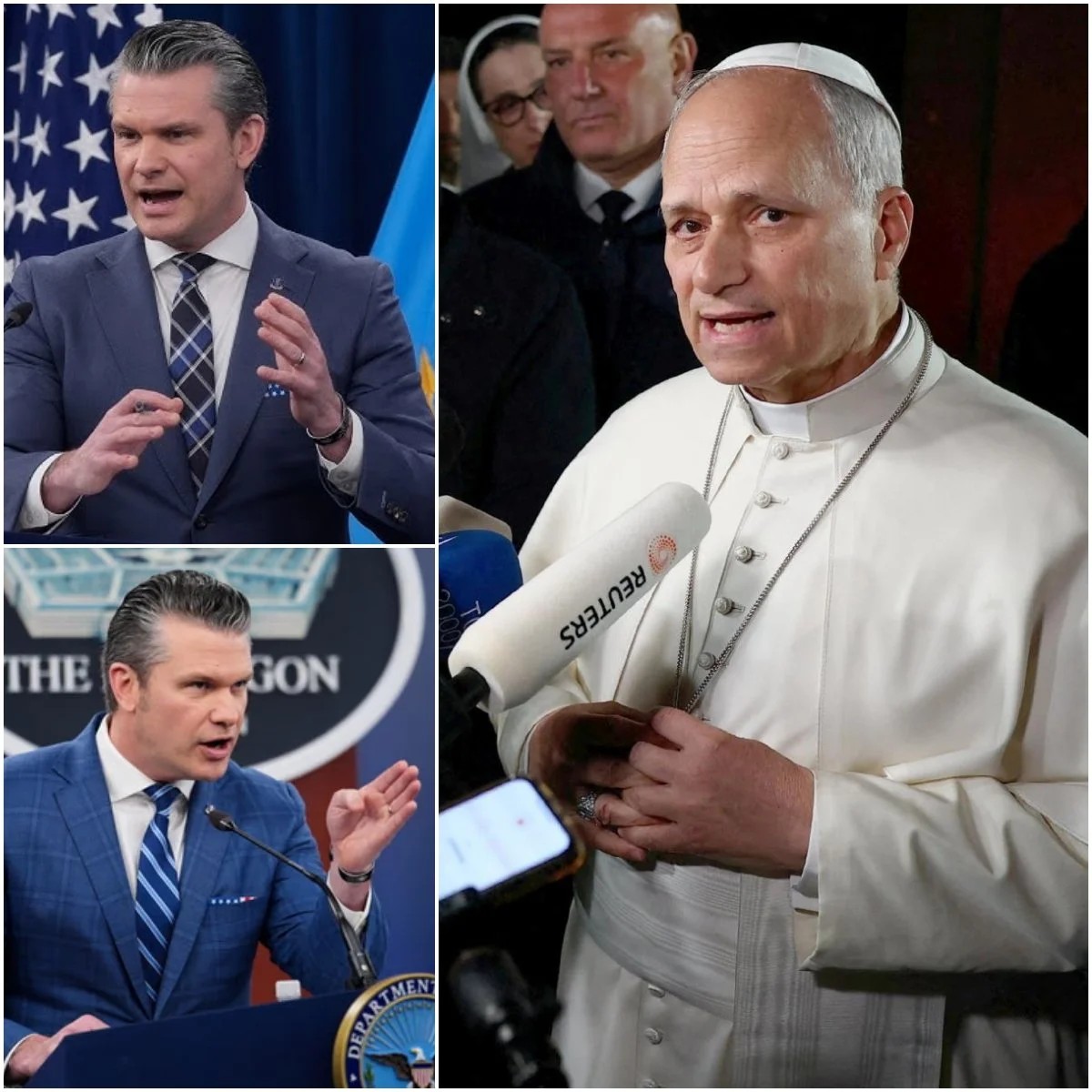
In a moment where politics and belief intersect with unusual intensity, Pete Hegseth has once again placed religion at the center of public discourse. Calling on Americans to pray for troops “in the name of Jesus,” his words arrived not in isolation, but amid broader conversations about the role of faith in national identity, conflict, and the moral framing of power in uncertain times.
Alongside him, Donald Trump echoed similar calls for prayer, reinforcing a familiar narrative where leadership invokes spiritual language during moments of geopolitical tension. The message, at first glance, seemed straightforward: unity through belief, strength through shared faith, and comfort through the act of collective prayer in times marked by fear, uncertainty, and the weight of global responsibility.
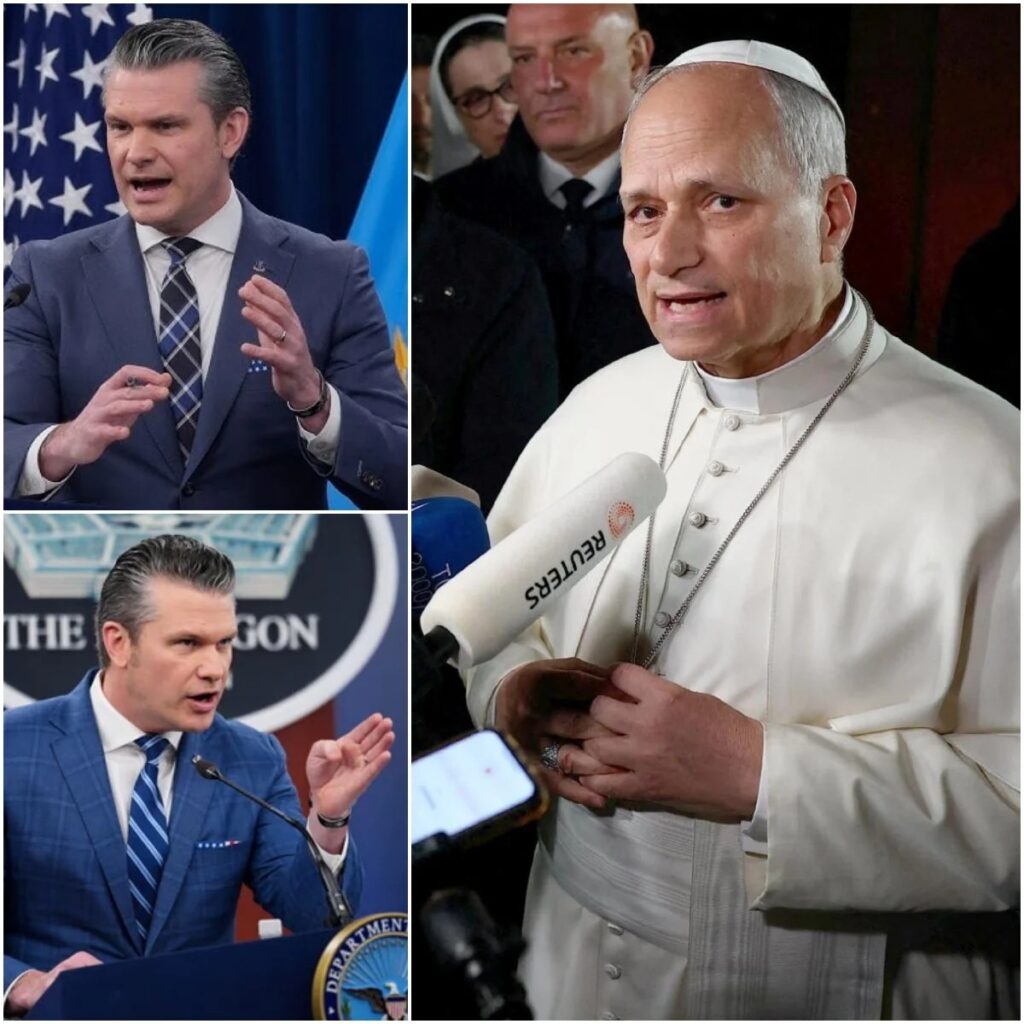
Yet the narrative did not remain unchallenged. When Pope Leo XIV entered the conversation, the tone shifted in a way few anticipated. His words did not align with political framing or rhetorical reassurance. Instead, they introduced a moral tension, one that questioned not the act of prayer itself, but the context in which it is invoked and the actions that surround it.
His statement was stark in its clarity. He spoke not as a strategist or public figure navigating approval, but as a voice rooted in religious conviction. By emphasizing the incompatibility between violence against innocents and the teachings of Jesus, he reframed the discussion entirely. The focus moved from who calls for prayer to what those prayers represent when placed alongside acts of conflict.
The reaction was immediate and layered. Supporters praised the moral consistency of his stance, while critics questioned its implications in a complex geopolitical environment. But beyond agreement or disagreement, one element stood out: the conversation had shifted from comfort to accountability, from unity of language to scrutiny of meaning, revealing deeper fractures beneath the surface.
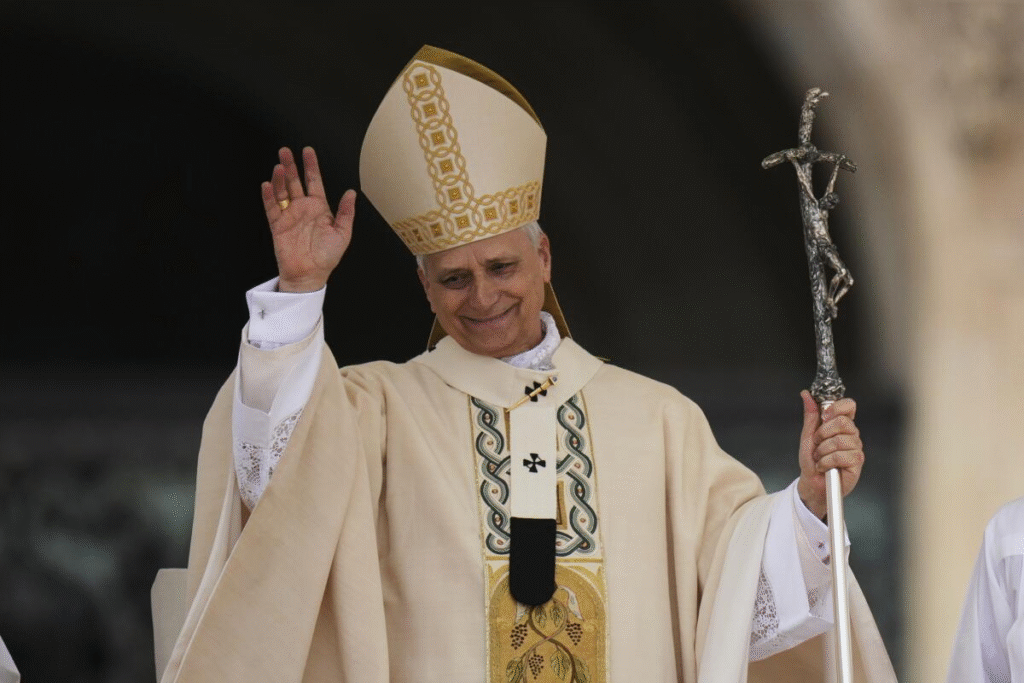
What emerged was not merely a debate about religion, but about its application. When leaders invoke faith, they often do so as a source of legitimacy, a shared language that resonates across diverse audiences. But when faith itself speaks back—through figures like Pope Leo XIV—it can challenge the very structures that seek to employ it, demanding alignment between word and action.
This tension is not new, but it feels sharper in the present moment. In an era where symbols carry amplified significance, the cross, the prayer, and the invocation of divine authority become more than expressions of belief. They become statements of intent, interpreted through the lens of policy, consequence, and the lived experiences of those affected by decisions made far from the front lines.
Observers have noted that such moments reveal a fundamental divergence. Power often seeks affirmation, a reinforcement of its position through shared values and collective identity. Faith, in its purest articulation, often resists that alignment when it conflicts with its principles. It does not adjust to context; it challenges it, sometimes uncomfortably, sometimes at significant personal or institutional cost.
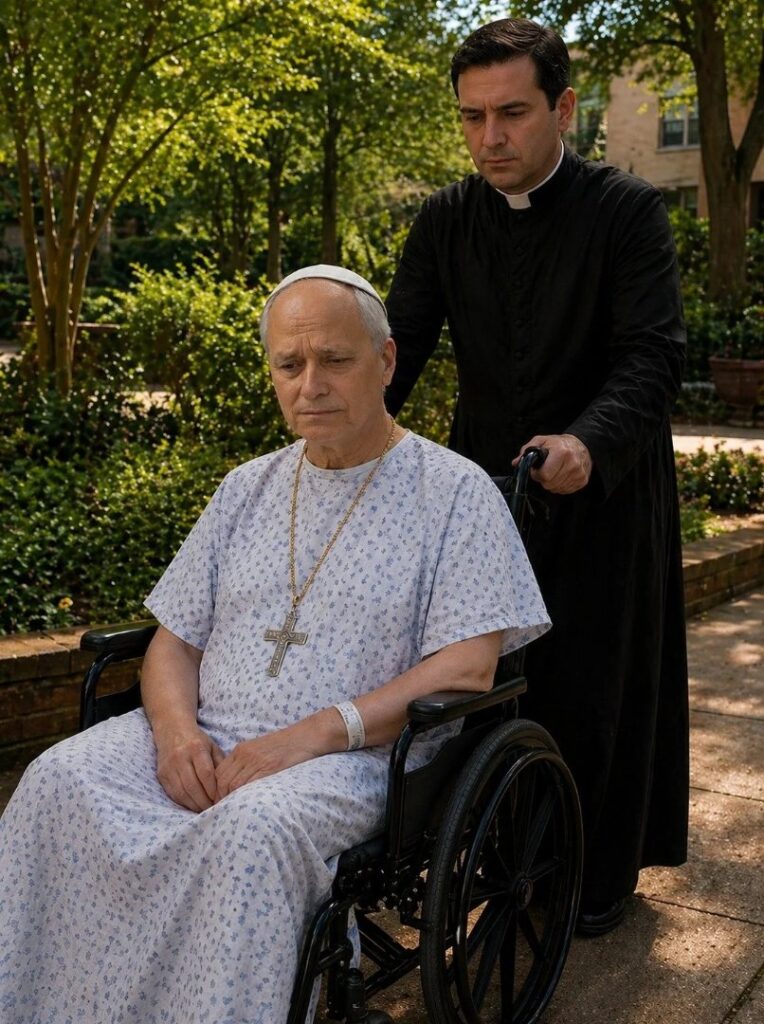
For those watching, the question becomes less about choosing sides and more about understanding the dynamic itself. What does it mean when spiritual language is used in political contexts? And what happens when that same language is turned inward, questioning the morality of the actions it was meant to support or soften in the public imagination?
The responses across communities have reflected this complexity. Some find reassurance in calls to prayer, seeing them as expressions of unity and hope. Others hear in them a dissonance, particularly when paired with narratives of force and conflict. Between these interpretations lies a space of reflection, where individuals are left to reconcile belief with reality on their own terms.
In the end, this moment may not be defined by resolution, but by the questions it leaves behind. Not whether prayer should be offered, but how it is understood. Not whether faith belongs in public life, but how it is represented when it appears. And not whether leaders should speak in its language, but whether they are prepared for it to speak back.
Because when faith is invoked, it does more than comfort. It listens. It observes. And, at times, it responds in ways that do not align with power, but instead call it into question. And in that response lies a quiet but enduring force—one that cannot be shaped by authority, only confronted by it, and perhaps, if taken seriously, transformed.